
Louis Armstrong
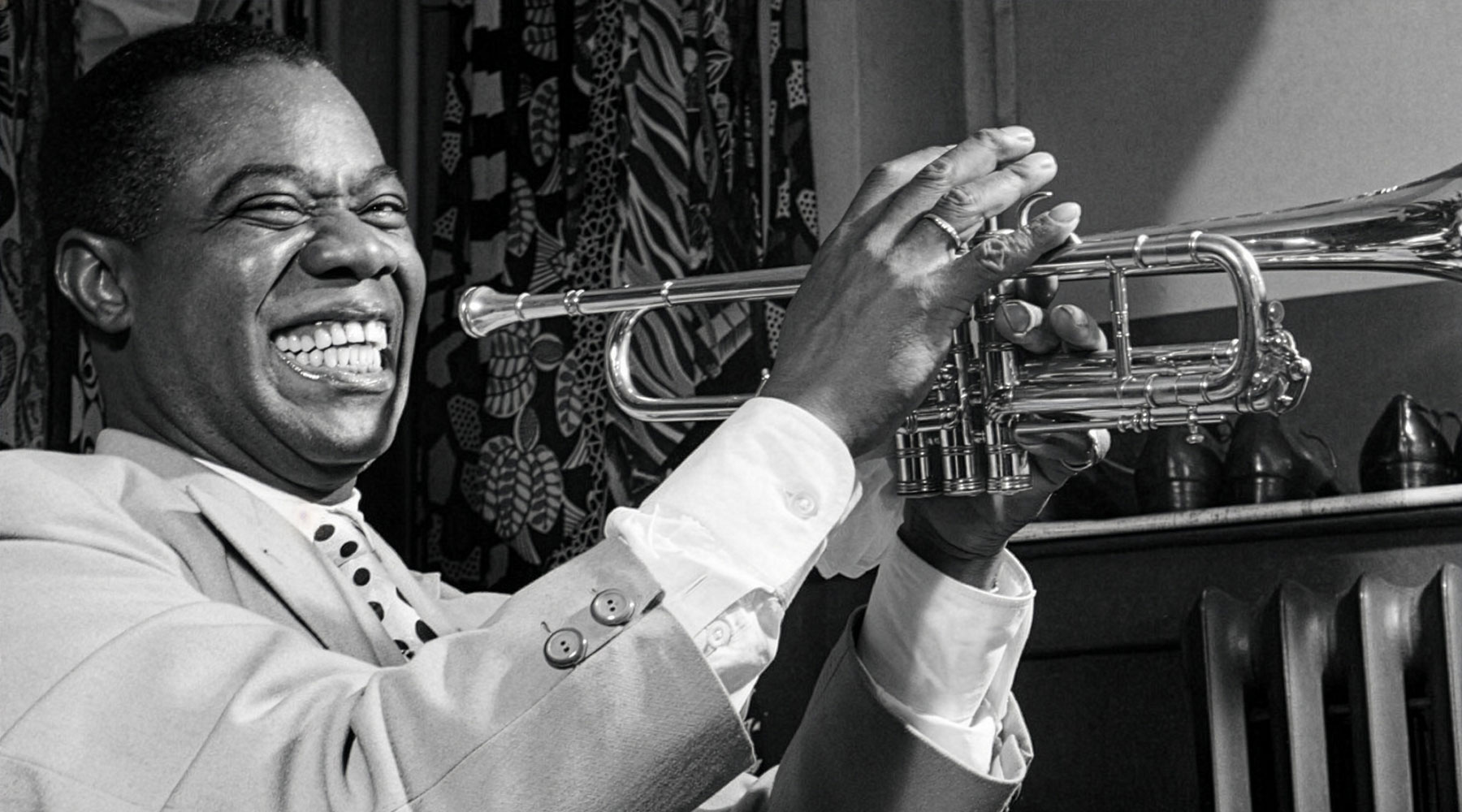
The Ambassador of Jazz – the First Great Jazz Soloist
Louis Armstrong is born on 4 August 1901 in New Orleans, United States, a city where different musical traditions meet and jazz is born. He grows up in a poor neighbourhood with his mother and grandmother, while his father leaves the family. From an early age, he works to help support his family and discovers music by listening to bands playing in the streets, at celebrations and in parades.
On New Year’s Eve in 1912, Louis takes his stepfather’s pistol and fires it in the street. He is arrested and sent to the New Orleans Home for Colored Waifs, an institution for children who need care and support. There, the music teacher Peter Davis teaches him to play the cornet, a brass instrument similar to the trumpet. Louis practises with determination and joins the institution’s band, discovering that music can become an important part of his life.
When he returns to his neighbourhood, he begins playing in local bands and learning from experienced musicians. Joe “King” Oliver, an important musician in early jazz, becomes his mentor. Armstrong also plays in bands travelling on Mississippi riverboats, gaining valuable experience and developing his talent through daily practice. However, he wants to develop his musicianship further and discover his own personal style.
In 1922, King Oliver invites him to Chicago to play with the Creole Jazz Band. Two years later, Armstrong moves to New York and joins Fletcher Henderson’s orchestra. During this period, he marries the pianist Lil Hardin, who encourages him to develop his own musical identity.
In 1925, Armstrong forms his own group, Louis Armstrong and His Hot Five. His recordings with the Hot Five and later the Hot Seven, between 1925 and 1928, are considered crucial to the development of jazz. With his expressive trumpet playing, distinctive rhythm and unique voice, he demonstrates the power of a musician who improvises and creates melodies of their own. In doing so, he plays a decisive role in bringing the soloist to the forefront of jazz.
In the years that follow, Armstrong becomes one of the most recognisable musicians in the world. He travels to many countries, introducing jazz to people with different languages and cultures. His smile, distinctive voice and friendly personality make him beloved by millions. He becomes known as the “Ambassador of Jazz” because of his major contribution to spreading this music around the world.
In 1964, his recording of “Hello, Dolly!” reaches the top of the American music charts, even surpassing the Beatles. In 1967, he records “What a Wonderful World”, a song celebrating the beauty of the world and the simple moments of everyday life. It becomes forever associated with his voice.
Armstrong also uses his fame to speak out against racism. In 1957, when Black students face obstacles in their efforts to attend school in Little Rock, Arkansas, he publicly condemns the authorities’ actions and criticises the President of the United States for his response.
Towards the end of his life, Armstrong experiences serious health problems and reduces his performances. He dies at his home in Queens, New York, on 6 July 1971, at the age of 69. His music, however, continues to be heard around the world, helping jazz develop into a universal musical language.
Louis Armstrong shows us that music is not just the notes on a musical score, but also the ideas, feelings and individual voice of each musician.
Armstrong believed and often said:
We can all play “do, re, mi”, but we have to find the other notes for ourselves!
Explore
1. Discover brass instruments!
Louis Armstrong is renowned for his talent on the trumpet. The trumpet is a brass instrument: the musician blows into its mouthpiece and uses their lips to produce the sound. By pressing the valves, they change the notes, while the sound comes out through the flared opening at the end of the instrument.
What does the trumpet sound like? How is it different from the trombone? What other brass instruments can you name?
Click here and explore the instruments of a symphony orchestra! Listen to different brass instruments and compare their sounds. What similarities and differences do you notice? Can you recognize the instruments just by listening, without looking at them?
2. Visit Armstrong’s house museum!
Of course, there is a museum dedicated to Louis Armstrong! The Louis Armstrong House Museum, in the Corona neighbourhood of Queens, New York, is the house where he lived with his wife, Lucille, for almost 30 years. Today, it is preserved as a museum, allowing visitors to discover the life, music and legacy of this remarkable musician.
Visit the museum’s official website here. Then, explore the museum’s collection and discover its online exhibitions, featuring photographs, recordings and stories from his life.
Which object made the biggest impression on you? What else would you like to learn about Armstrong?
3. Listen to jazz through his music!
Jazz emerges from African American communities in the United States, with New Orleans playing a particularly important role. It brings together different musical traditions and is known for improvisation: musicians create and transform melodies as they play. Louis Armstrong changes the history of jazz through his distinctive trumpet playing and use of his voice.
Listen to some of his best-known recordings:
- West End Blues – The composition by King Oliver becomes particularly famous through Armstrong and the Hot Five’s 1928 recording. Listen carefully to Armstrong’s impressive trumpet introduction!
- Heebie Jeebies – Listen to how Armstrong uses his voice like a musical instrument, singing sounds and syllables instead of ordinary words. This technique is called scat singing.
- What a Wonderful World – Enjoy Armstrong, later in his life, performing one of his most beloved ballads.
Which song did you like best? What feelings does each one evoke in you?