
Matthew Henson
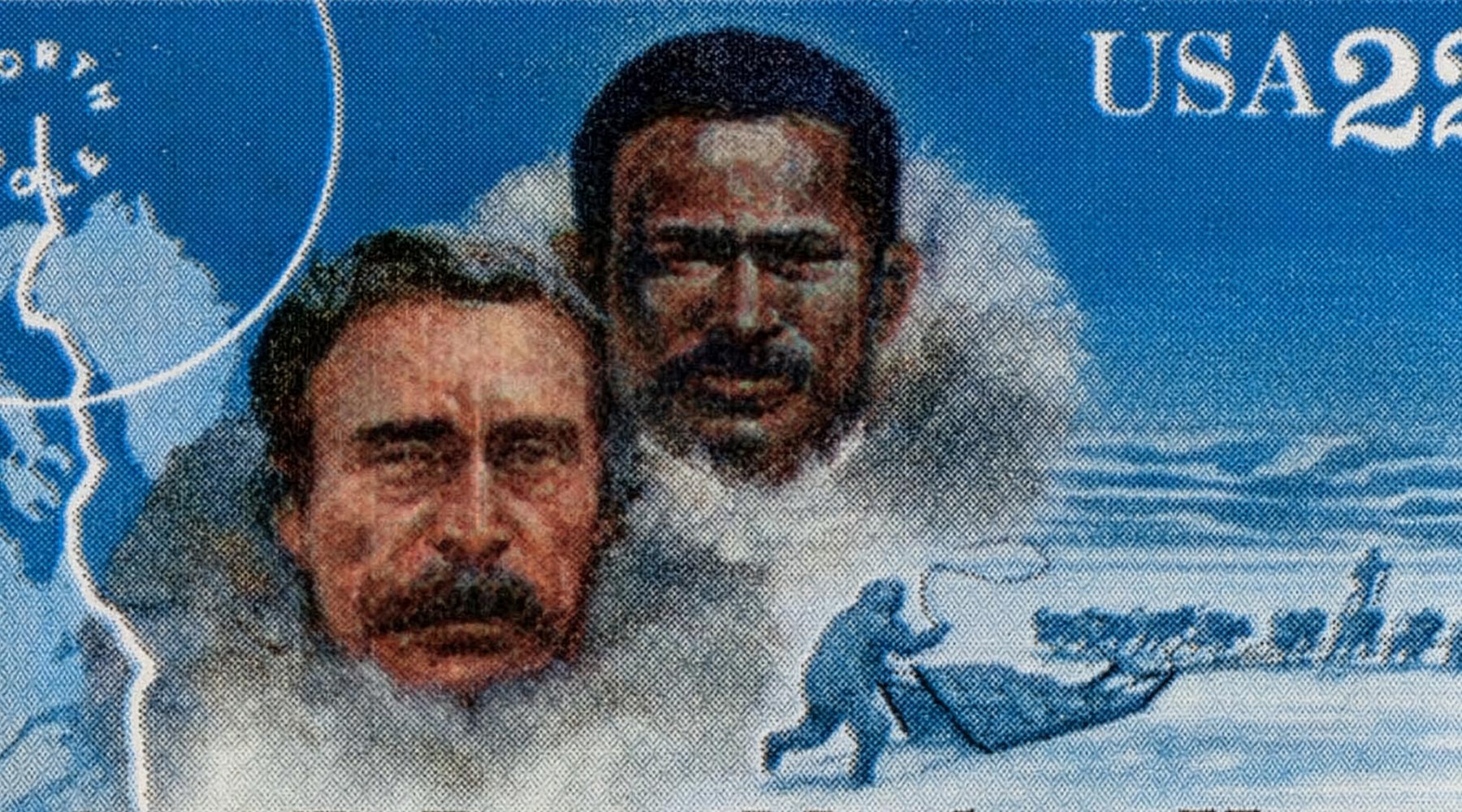
The pioneering explorer who reached the ends of the Earth
Matthew Alexander Henson was born on 8 August 1866 in Maryland, United States. His family faced violence and discrimination because of the colour of their skin and was forced to leave their farm. When Henson was still a child, he lost both his parents and went to live with relatives in Washington, D.C.
From an early age, he dreamed of travelling and discovering the world. At around twelve years old, he found work on a merchant ship. The captain took him under his wing and taught him to read, write and navigate at sea. Henson travelled to distant places, gained valuable knowledge and discovered his passion for exploration.
In 1887, he met Robert Peary, an American explorer. Impressed by Henson’s maritime knowledge and skills, Peary hired him as his assistant. The two men worked closely together and, in 1891, set off on an expedition to Greenland.
There, Henson met the Inuit, Indigenous peoples of the Arctic. He learned their language and gained valuable knowledge about surviving in an environment of extreme cold, snow and ice. He learned to drive sledges and travel across the ice, skills that would prove essential on his later expeditions.
Over the following years, Henson and Peary undertook several expeditions in the Arctic, aiming to reach the North Pole, the northernmost point on Earth. Their first attempts failed. In 1906, their expedition aboard the Roosevelt reached one of the northernmost points ever reached by explorers at the time, but they did not manage to reach the Pole.
In 1908, they set off on another expedition. Henson helped prepare the team and drew on his knowledge of sledges and the harsh conditions of the Arctic. Four Inuit companions also travelled with them, bringing invaluable experience and knowledge to the expedition.
On 6 April 1909, Henson, Peary and their four Inuit companions reached a point they believed to be the North Pole. Henson later recalled that he believed he was the first member of the team to arrive there.
I think I’m the first man to sit on top of the world!
However, the expedition’s measurements do not allow historians to confirm with certainty that they reached the exact geographical North Pole.
Despite the significance of the expedition, Peary became famous and received important honours, while Henson did not receive the recognition he deserved. The fact that he was Black, in a society marked by racial discrimination, contributed to his achievements being overlooked.
In 1912, Henson published his book A Negro Explorer at the North Pole, in which he recounted his experiences. In 1937, he became a member of the Explorers Club in New York, an important organisation dedicated to exploration. In 1944, the United States Congress awarded him, along with other members of the expedition, the Peary Polar Expedition Medal.
Matthew Henson died on 9 March 1955, at the age of 88. In 1988, his remains were moved, along with those of his wife, to Arlington National Cemetery in recognition of his contribution. In 2000, the National Geographic Society posthumously awarded him the Hubbard Medal, one of its highest honours for exploration.
Explore
1. Who were the great explorers?
Matthew Henson took part in a historic expedition with Robert Peary, whose goal was to reach the North Pole. Which other explorers do you know? Where did they travel, and what did they discover?
Look here at some books you can read with your family to discover fascinating journeys and adventures. Don’t forget to look in your own library or in your history textbook, too. Which explorer will you discover there?
2. What were expeditions like in the past?
How did explorers find their way? What equipment did they use? What did their clothes look like, and how did they travel to distant, unfamiliar places?
Museums around the world tell the stories of exploration through objects, maps, photographs and films. You can explore these museums online:
- The Museum of the North Pole Expedition, which presents explorers’ attempts to reach the North Pole.
- The Explorers Museum in Ireland.
- The Scott Polar Museum at the University of Cambridge, with objects and stories from polar expeditions.
- The National Maritime Museum in Greenwich, with collections related to navigation and sea exploration.
If we were to create a museum dedicated to Matthew Henson, what would we put inside? A map of the Arctic or clothes for the extreme cold? A sledge or perhaps an expedition diary? Choose the objects you think are essential and create your own museum exhibition!
3. How do the Inuit live in the Arctic?
The Inuit are Indigenous peoples who live in Arctic regions, including Greenland, Canada and Alaska. Matthew Henson learned a great deal from their knowledge and skills, which helped him survive and travel through the frozen landscape.
How do they travel across the snow? How do they protect themselves from the cold? How do they adapt their daily lives to the harsh weather conditions? Click here to discover more about the Inuit.
Did you know that, in some regions, the Inuit traditionally built temporary shelters from compacted snow, known as igloos? Download the Museum’s activity sheet here and build your own igloo. What materials will you need? How will you arrange them to form a dome?