
Martin Luther King Jr.
Leader of the civil rights movement for Black Americans in the 1950s and 1960s
Martin Luther King Jr. is born on 15 January 1929 in Atlanta, Georgia, in the United States. His father is a minister and his mother is a teacher. From an early age, he experiences the effects of racism and racial discrimination because of the colour of his skin. At the age of six, he has to attend a school exclusively for Black children, in accordance with the racial segregation laws in force at the time.
He continues his education and stands out for his dedication and academic achievements. Although he initially considers becoming a doctor or a lawyer, he eventually decides to follow in his father’s footsteps and become a minister. In 1955, he receives his doctoral degree in theology from Boston University. He strongly believes in equality, justice and non-violence, and wants to help create a world in which all people are treated with dignity and respect.
In 1955, a defining period in his life begins. When Rosa Parks is arrested for refusing to give up her seat to a white passenger on a bus in Montgomery, Alabama, the Black community organises a bus boycott to protest racial segregation. King takes on a leading role in this struggle and is elected president of the Montgomery Improvement Association, the organisation that coordinates the boycott.
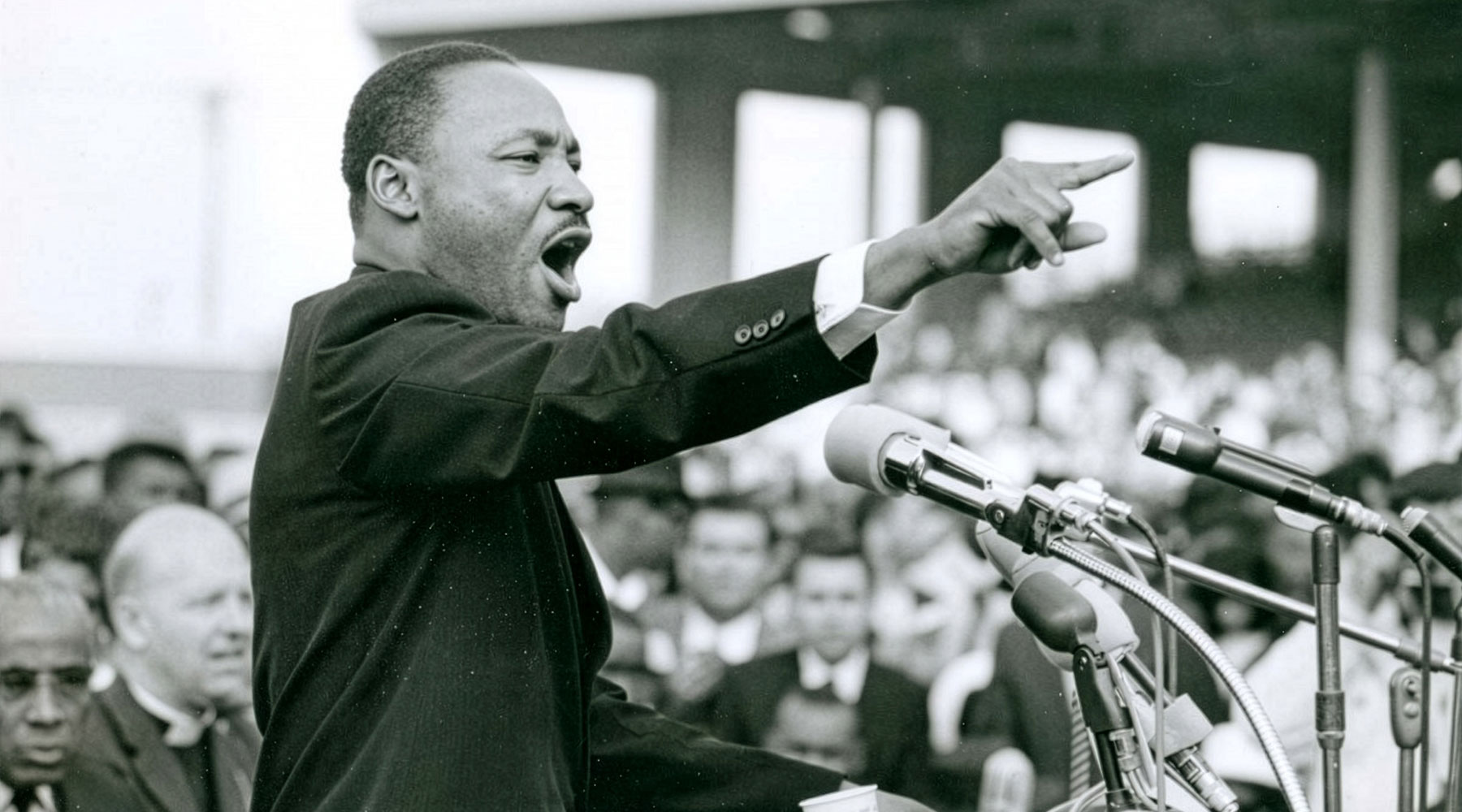
King stands out for his oratorical skills, determination and commitment to peaceful protest. Through speeches, demonstrations and the collective action of thousands of people, the movement continues to demand equal rights. After 381 days of boycotting the buses, a court ruling declaring bus segregation unconstitutional leads to its end in Montgomery.
King continues to travel throughout the United States, speaking about equality and organising peaceful demonstrations. His message inspires more and more people to join the struggle for civil rights.
On 28 August 1963, during the historic March on Washington for Jobs and Freedom, he delivers one of the most famous speeches in history, which becomes known as “I Have a Dream”. Before a huge crowd, he speaks of his dream of a world in which all people are treated equally and are not judged by the colour of their skin.
I have a dream today! I have a dream that my four young children will one day live in a nation where they will not be judged by the color of their skin, but by the content of their character!
In 1964, he is awarded the Nobel Peace Prize for his commitment to the peaceful struggle for civil rights. That same year, the Civil Rights Act of 1964 is passed in the United States, prohibiting racial discrimination in public accommodations and in various areas of social life, among other things. King continues to fight for equality and justice, while also campaigning to eradicate poverty and promote peace.
On 4 April 1968, while in Memphis, Tennessee, to support the struggle of the city’s sanitation workers, Martin Luther King Jr. is assassinated at the age of just 39.
His death shocks the world, but his ideas and his struggle continue to inspire people across the globe. His life remains a lasting reminder that equality, freedom and respect for everyone’s rights are values worth fighting for.
Explore
1. I Have a Dream!
Watch here the speech Martin Luther King Jr. delivers in Washington, D.C., on 28 August 1963. You can also read the text of his speech here.
What is Martin Luther King Jr.’s dream? What do you think he might dream of if he were alive today? If you were in his place, what would your dream be?
Download here the Museum’s cloud templates and write your own dream on them! Print them out, fill them with your ideas and cut them out to create your own mobile!
2. Let’s Make a Dove of Peace!
The dove is a symbol of peace. Download here the Museum’s dove template and decorate it with your fingerprints, together with your family, friends or classmates!
All you need is some acrylic paint and, of course, your… fingers! Everyone can write their name and add a little dot in the colour they used.
Isn’t it wonderful what we can create when we work together?
3. Monuments That Tell Stories
Did you know that there is a monument in Washington, D.C., known as the Stone of Hope? It is a large granite sculpture carved in the likeness of Martin Luther King Jr. It forms part of the Martin Luther King Jr. Memorial and symbolises the hope that can emerge from difficult times.
Look carefully at the photographs below and see if you can identify the monument!
Another monument dedicated to Martin Luther King Jr. and his wife, Coretta Scott King, can be found in Boston. It is called The Embrace and is a large bronze sculpture depicting the couple’s arms wrapped around each other in an embrace. Created by artist Hank Willis Thomas, the sculpture was unveiled in January 2023 at Boston Common, one of the oldest public parks in the United States.
And now it’s your turn to explore! Is there a similar monument in your area? If so, which person does it depict, or what does it commemorate? Why do you think it was created?