
Bessie Coleman
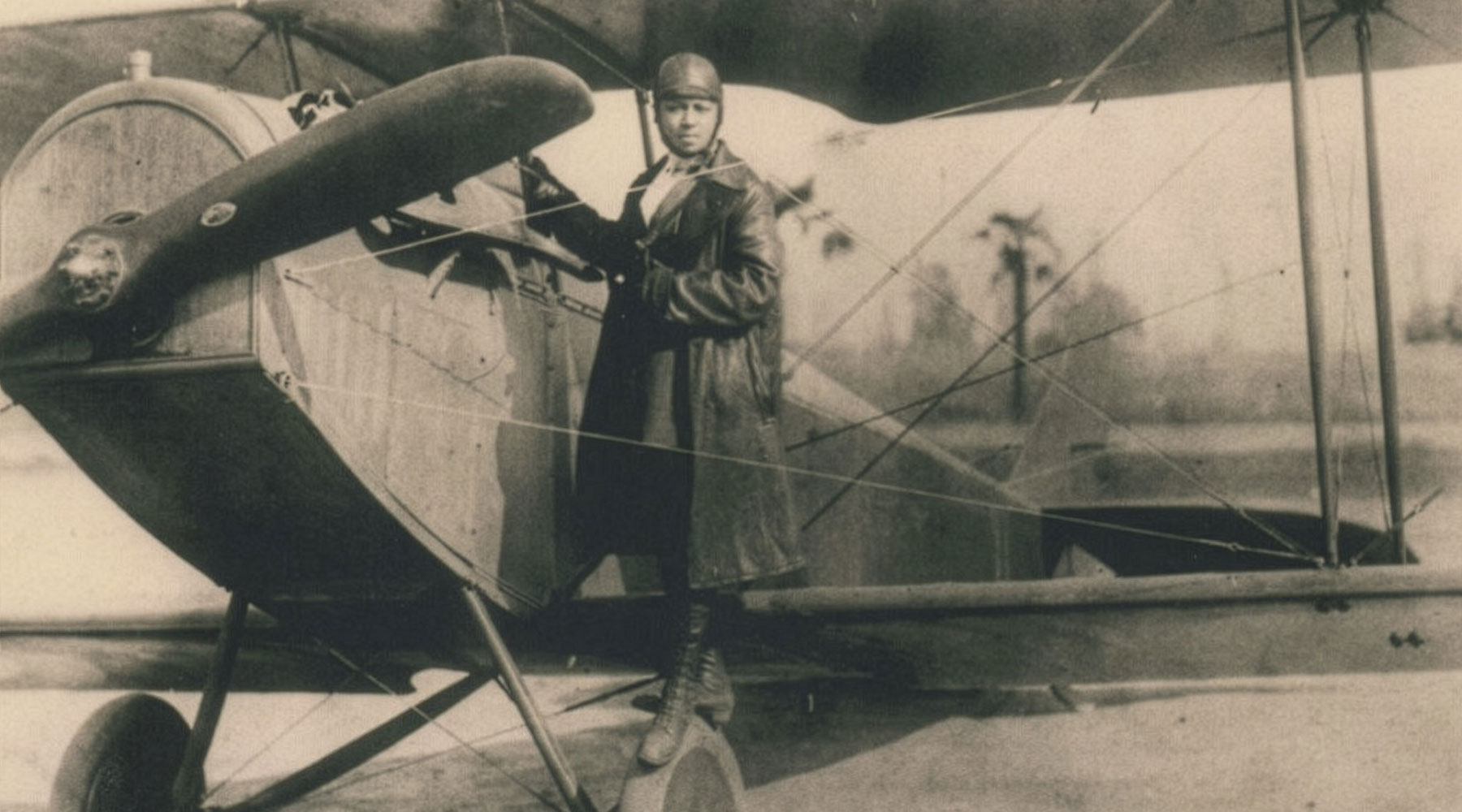
The first African American woman to earn an international pilot’s licence
Bessie Coleman was born on 26 January 1892 in Atlanta, Texas, and was one of thirteen children in a poor family. Her parents, George and Susan Coleman, worked hard to support their family. From an early age, Bessie helped in the cotton fields, but she loved school and excelled at mathematics. Her mother encouraged her to pursue an education, even though opportunities for Black children were limited. At the age of eighteen, Coleman began studying at a university for Black students in Oklahoma, but financial difficulties forced her to leave before completing her studies.
In 1915, she moved to Chicago, where she worked as a manicurist. There, she heard stories about pilots serving in the First World War and was fascinated by her brothers’ accounts of French women flying aeroplanes. She began to dream of becoming a pilot herself. However, when she tried to enrol at a flight school in the United States, her applications were rejected because of racial discrimination and prejudice against women.
Coleman refused to give up on her dream. With the encouragement and support of Robert Abbott, publisher of the Chicago Defender newspaper, she learned French and travelled to France in 1920. There, she was accepted into a flight school and trained intensively. On 15 June 1921, she earned an international pilot’s licence, becoming the first African American woman to achieve this distinction.
When she returned to the United States, she discovered that having a pilot’s licence was not enough to find work easily. To earn a living through aviation, she travelled back to Europe for further training in aerial exhibition flying. On 3 September 1922, she performed one of her first major public flying displays in the United States, amazing audiences with her daring manoeuvres. She soon became known as “Queen Bess”.
Coleman used her growing fame to challenge racial discrimination. She refused to take part in flying displays when organisers enforced segregation between Black and white spectators. She also spoke at schools and encouraged young African Americans to pursue aviation. Her greatest ambition was to establish her own flight school, giving other young people opportunities that she herself had been denied.
On 30 April 1926, during a test flight in Jacksonville, Florida, the aeroplane developed a problem, and Coleman fell from it. Both she and the pilot, William Wills, lost their lives. She was only 34 and never had the chance to fulfil her dream of opening a flight school.
For many years, on 30 April, the anniversary of her death, African American aviators—both men and women—flew in formation over Lincoln Cemetery near Chicago and left flowers at her grave. This tradition began in 1931, when a group of pioneering Black aviators first honoured her memory in this way.
Through these tributes, they honoured “Queen Bess”, who showed that:
The air is the only place free from prejudice!
Explore
1. Which women conquered the skies?
Bessie Coleman became the first African American woman to earn an international pilot’s licence, but she was not the first woman to fly an aeroplane! Before and after her, many women dared to take to the skies in aeroplanes and balloons, at a time when aviation was still in its early stages.
French aviator Raymonde de Laroche became the first woman in the world to receive a pilot’s licence in 1910. Amelia Earhart became famous for her pioneering flights and disappeared in 1937 while attempting to fly around the world.
If you would like to discover more women who made their mark on the history of aviation, read about:
- Jeanne Geneviève Labrosse, a pioneer of balloon flight;
- Sabiha Gökçen, one of the first women to fly military aircraft;
- Amy Johnson, who became the first woman to fly solo from Britain to Australia in 1930.
Can you think of another woman aviator?
2. The “Jenny”: Coleman’s aeroplane!
Bessie Coleman flew the Curtiss JN-4, a biplane nicknamed the “Jenny”. The JN-4 first appeared in 1916 and was widely used to train pilots. Later, these aeroplanes were also used in flying displays.
What did an aeroplane like this look like? How many wings did it have? What was its body made of?
Click here to download the Civil Air Patrol activity booklet. Follow the instructions to print and build your own model of the “Jenny”!
3. Ready for take-off?
Put on your jacket, slip on your pilot’s goggles and get ready to conquer the skies! Click here, choose your aeroplane and try taking off, flying over real-world locations and landing safely. Where will your first flight take you?
Happy flying!