
BHM 2026 | 4th Stop | Today and the Future
Nearly 100 years after the first Negro History Week, this story has never stopped. It lives, it evolves, and it continues to be written every day.
Today, Black History Month is celebrated in schools, museums, and communities — not only in the United States, Canada, and the United Kingdom, but around the world.
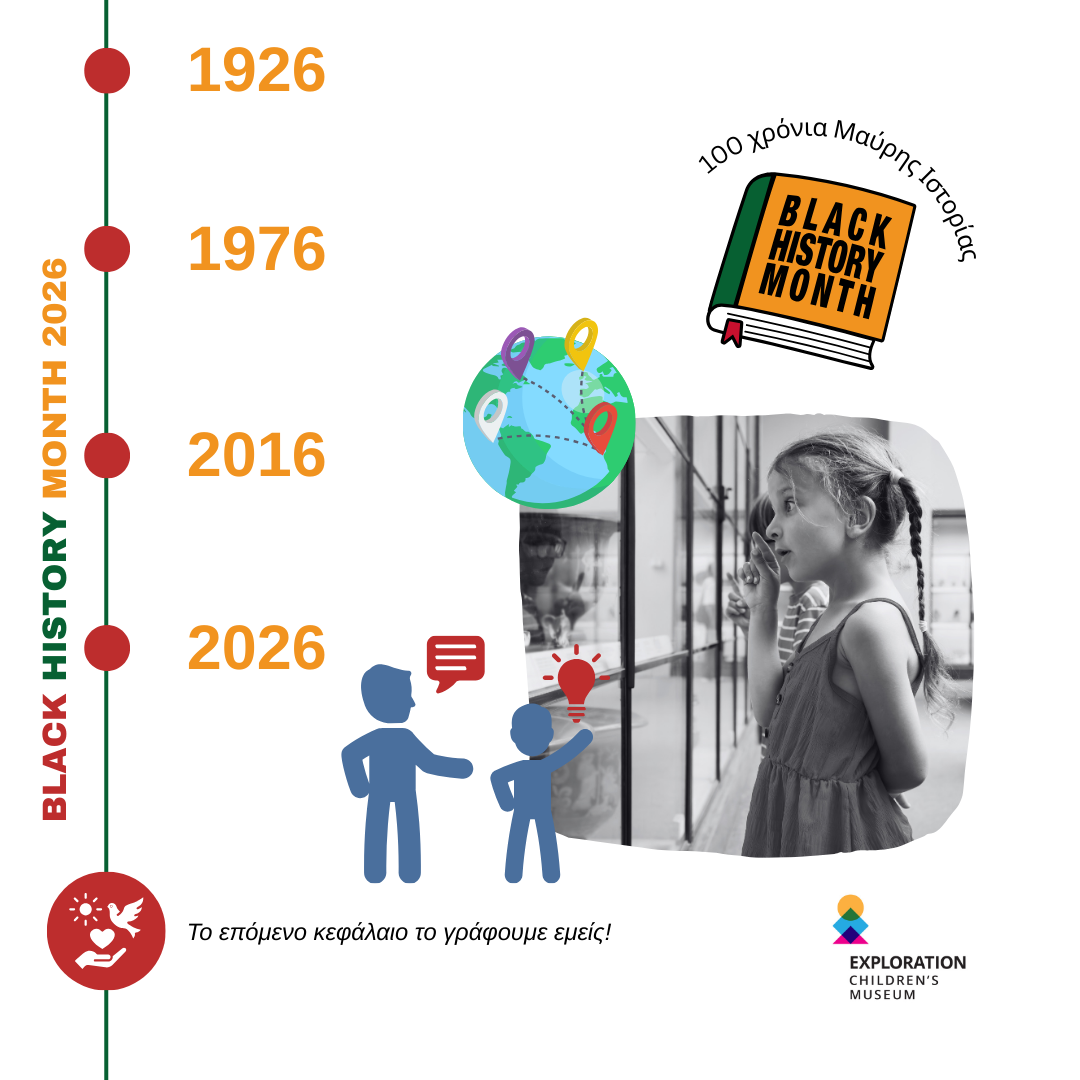
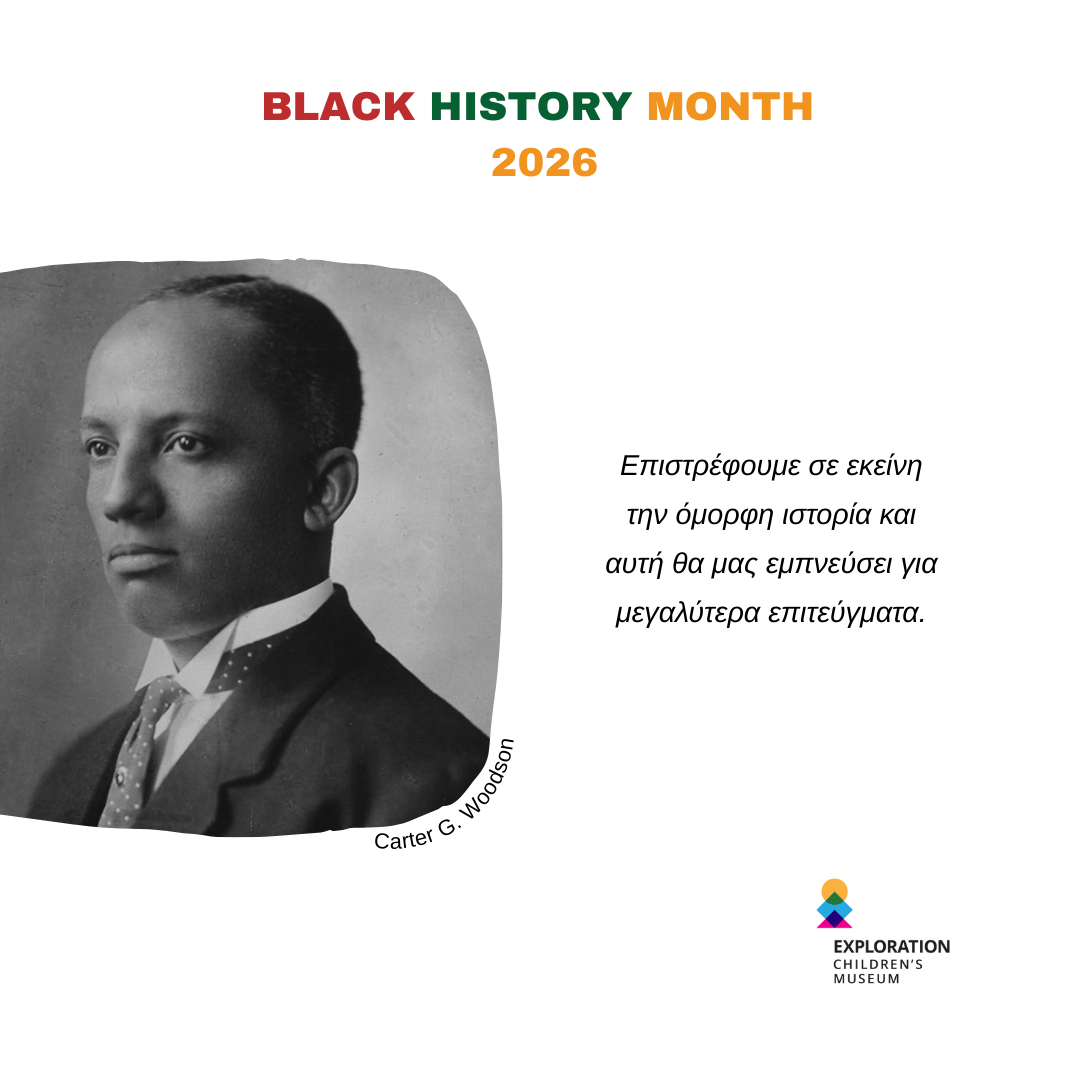
The Association for the Study of African American Life and History (ASALH) continues the tradition established by Carter G. Woodson. Each year, it announces a central theme — such as “African American Women in History” (1996) or “Black Health and Wellness” (2022) — and develops educational materials, posters, and activities that encourage learning and participation. These themes help us focus on specific aspects of African American history, highlight contributions and struggles, and make learning more meaningful and engaging for schools and communities.
Students take part in lessons and workshops. Museums curate special exhibitions honoring artists, scientists, and individuals whose work and determination advanced equality and justice, opening new paths for change. Communities organize discussions, screenings, and events that connect the past with the present. And here, at the Exploration Children’s Museum, every February becomes an opportunity to reopen these stories — to discover people who changed the world and to explore how their dreams can inspire our own.
The year 2026 marks 100 years since the first spark lit by Woodson. And his idea continues to travel, touching lives and illuminating stories across the globe. No part of this history remains in the shadows.
In a world that still faces inequality, Black history is not simply remembrance. It is knowledge. It is memory. It is inspiration. It holds a permanent place in schools, museums, and communities — and it continues to shape new generations every day.
As we reach 100 years of this journey, one question remains alive: How do we want this story to be written in the next 100 years?
The answer lives in our memory, our learning, and our participation.
The future of Black history is being written now — through all of us.