
BHM 2026 | 3rd Stop | Moments That Shape the Celebration
After 1976, Black History Month enters a new era. It is no longer only a celebration or an educational initiative; it becomes part of official cultural and historical memory. From that point on, every President of the United States formally proclaims February as Black History Month.
The struggles of previous decades for equal rights are already reshaping the way society understands history. During the 1980s and 1990s, more and more schools, universities, and public institutions begin systematically integrating Black history into their educational programs.
At the same time, museums, libraries, and archives collect, organize, and present this history to the public, bringing forward the lives, struggles, and achievements of African Americans.
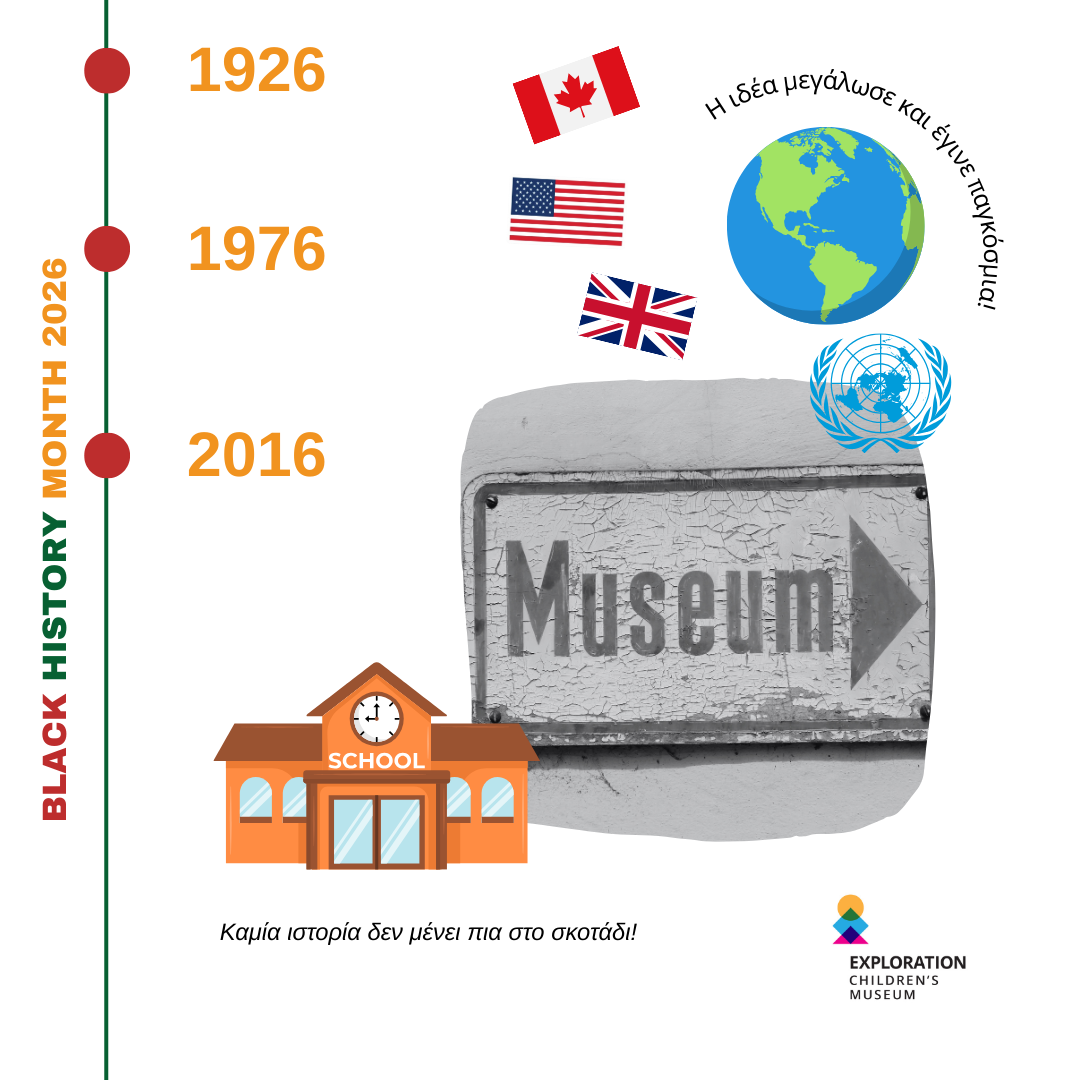
Then, the celebration moves beyond the borders of the United States: In 1987, it is officially established in the United Kingdom. In 1995, it is officially recognized in Canada.
Black history is no longer seen as only an American story; it becomes an international act of remembrance and recognition. Meanwhile, international organizations such as the United Nations support initiatives that promote historical justice, remembrance, and the recognition of people of African descent. Through global programs and anti-racism campaigns, the central message of Black History Month grows stronger: this history belongs to all of us.
In 2016, a historic milestone takes place: the National Museum of African American History and Culture opens in Washington, D.C.
For the first time, Black history has a major national museum—a permanent home for memory, education, and culture. A space dedicated to the past, the present, and the future of this story. Memory is no longer kept only in books. It lives, it is taught, and it is shared.
And today? How does this story continue to grow and evolve, nearly 100 years later?
Discover it in our 4th and final stop: Today and the Future.