
BHM 2026 | 2nd Stop | 1976: From a Week to a Movement
Black History Week, launched in 1926 by Carter G. Woodson, does not remain a small, symbolic observance for long. From the very beginning, the response is strong.
Soon, schools, libraries, communities, and organizations across the country begin using the week as an opportunity to learn about African American history and to highlight important contributions. It becomes a powerful tool that brings to light stories and people long left out of the official historical narrative.
Woodson and the Association for the Study of Negro Life and History set a theme each year. Around it, they create and share educational materials—books, images, posters, and ideas for school activities—making Black history more engaging, accessible, and alive.
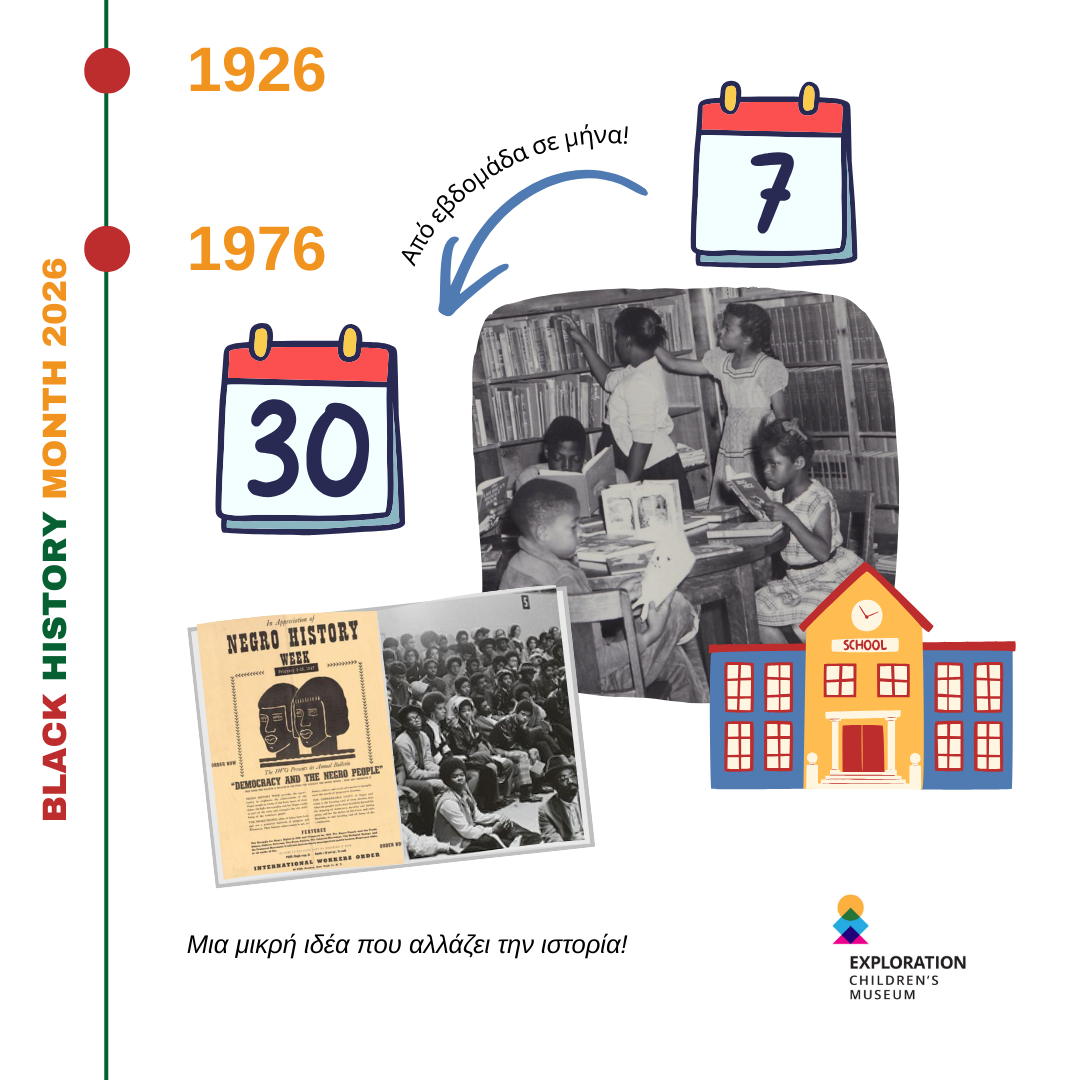
The idea quickly spreads from city to city. Over time, more schools and organizations take part. Black History clubs form, theatrical performances and public events appear, and Black history becomes part of everyday learning. Despite the growing success, Carter G. Woodson cautions against losing the true meaning of the week. He believes that one day there will be no need for a special week or even a month—because Black history will be taught all year long.
During the 1950s and 1960s, as the Civil Rights Movement gives voice and strength to the African American community, knowledge of Black history becomes even more important. Black History Week grows into a broader movement of knowledge, remembrance, and recognition. Then, in 1976, fifty years after the first observance, the celebration officially expands to the entire month of February. A small week becomes Black History Month, as we know it today.
An idea that begins small changes the way we see and learn history.
What other key moments shape this celebration?
Discover them with us at the 3rd stop of our journey!