

Playing with water! Does it float or sink?
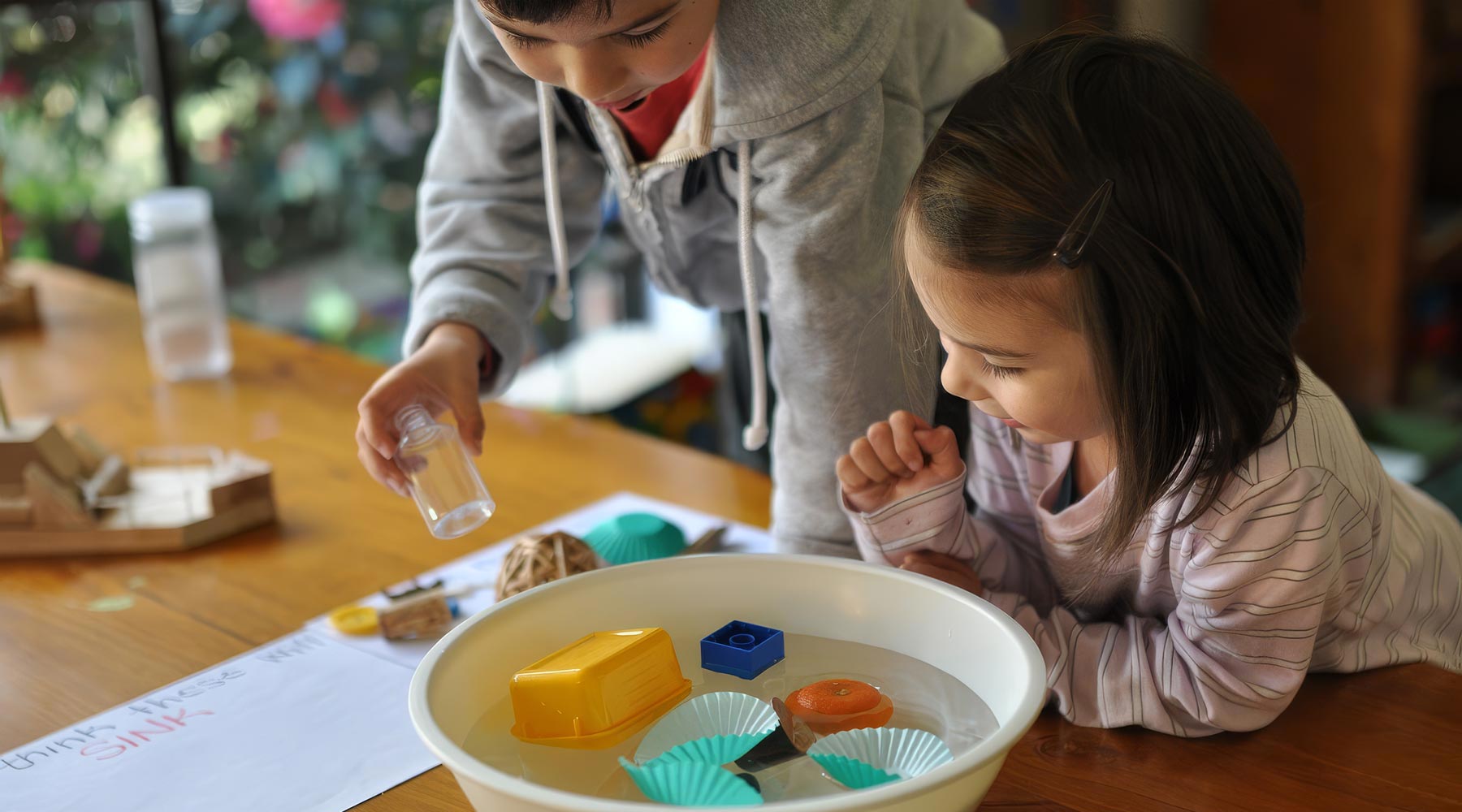
Water is all around us and has many interesting properties. When we place different objects in water, some stay on the surface while others sink. Why does this happen? How does buoyancy help some objects float?
It’s time to experiment with water and discover what happens!
Materials
- A large basin filled with water
- A selection of objects made from different materials, with different sizes and shapes, such as:
- Stones and pebbles
- Pieces of wood and modelling clay
- Balls of different sizes
- Corks and plastic bottle caps
- Empty, sealed plastic bottles
- Paper and plastic boats
Instructions
- Let’s Make Predictions! Place the objects on a table and examine them together with the children. Which are big or small? Which are light or heavy? Which do you think will float and which will sink?
- Time to Make a Splash! Place the objects in the water one at a time and observe what happens. Which stay on the surface? Which sink? Were your predictions correct?
- Let’s Discover the Differences! Discuss what you observed. Why do some objects float while others sink? Does their weight alone make a difference, or do the material and shape also play a role?
Happy exploring!
#Tips
- Floating or Sinking? An object floats when it stays on the surface of the water, while it sinks when it moves down towards the bottom. You can write the two words on separate sheets of paper and place the corresponding objects or your observations under each heading.
- Let’s Compare! Try objects made from the same material but with different sizes and shapes. Then try objects of a similar size made from different materials. What do you notice?
- Safety First! This activity requires adult supervision. Use safe objects that are suitable for the children’s ages, and never leave young children alone near a container of water.