
Let’s explore… earthquakes!
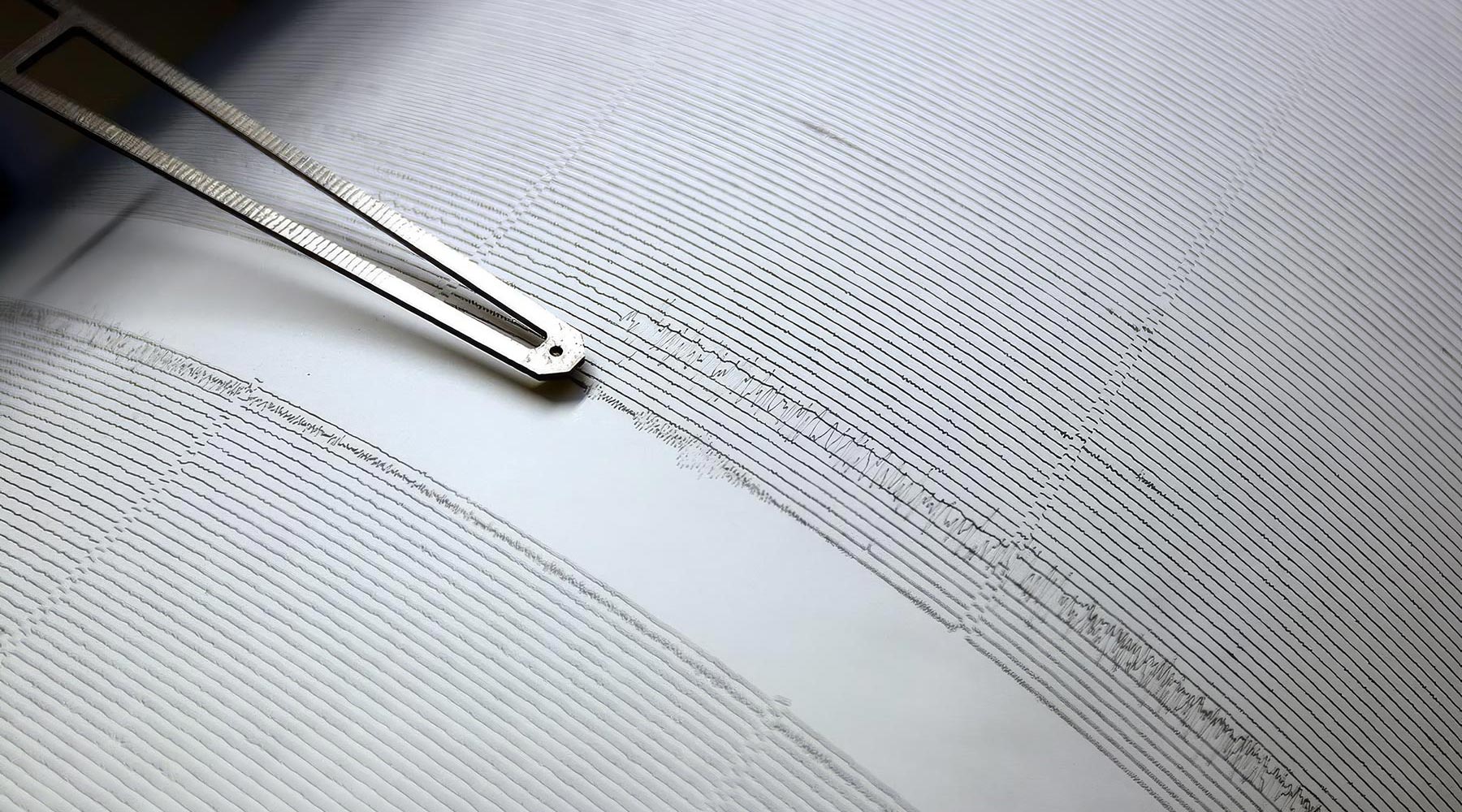
Recently, several earthquakes have occurred in our area. But what does the term “earthquake” mean? How does an earthquake happen? What exactly happens to the Earth?
An earthquake is a natural phenomenon in which the ground suddenly starts to move. Earthquakes occur when energy that has built up inside the Earth is suddenly released, usually as a result of the movement of tectonic plates. This energy travels in the form of seismic waves, which move through rocks. When these waves reach the Earth’s surface, they cause the ground to shake — and we can feel it too!
But how is energy transferred through seismic waves?
Let’s experiment!
Find a small metal baking tray and place it upside down on a table, with its opening facing downwards. Place a large sheet of paper on top of the tray, covering as much of its surface as possible. Sprinkle a handful of rice onto the paper.
Start gently tapping the side of the tray with a metal spoon. Gradually increase the strength and frequency of your taps. What do you notice? What happens to the grains of rice?
The energy from your taps is transferred to the tray, causing it to vibrate. These vibrations make the grains of rice bounce on its surface. With this experiment, we can observe how vibrations travel from one place to another. Try repeating the experiment with beans, lentils or other materials you can find. What differences do you notice each time?
Scientists have discovered that the Earth’s crust is not one continuous piece, but is made up of large sections that move and interact with one another. These sections are called tectonic plates. Their movement can cause earthquakes. Scientists have also identified tectonic activity on Mars, although the planet does not have the same active plate tectonics as Earth.
But what do these tectonic plates look like? How do they move?
Let’s experiment!
Cut two rectangular pieces of cardboard. Make a hole near one end of each piece and thread a piece of string through it, so you can pull the cardboard.
Place the two pieces of cardboard inside a large baking tray, with their edges meeting roughly in the middle. The strings should remain outside the tray. Cover the cardboard with soil, flour, sand or other materials you can find.
Slowly pull the strings and observe what happens. How does the material on top of the cardboard move? How does it fall into the tray? Try pulling the strings with greater force or more suddenly. You can also move the cardboard in different directions. What changes do you notice each time?
Now it’s time to add some houses! Use building blocks, cardboard tubes, bottle caps or small plastic containers to build little structures on top of the cardboard.
Move the cardboard again and observe what happens to your structures. Which ones stay upright and which ones fall over? What might affect their stability?
The cardboard pieces represent tectonic plates, and their movements help us understand how ground movement can affect the things built on top of it. This experiment is a simple model and does not accurately represent all the processes that cause a real earthquake.
Happy exploring!
#Tips
- Discover the science of earthquakes! The science that studies earthquakes is called seismology, a branch of geophysics. Seismologists use special instruments, such as seismographs, to record ground vibrations caused by earthquakes. By studying these recordings, they can calculate an earthquake’s magnitude and determine the location of its epicentre. Did you know that the first known earthquake detector was invented in China in AD 132 by Zhang Heng? Visit this link to discover more about the history of seismographs!
- Meet Enceladus! In Greek mythology, Enceladus was one of the Giants who fought against the gods during the Gigantomachy, the battle between the gods and the Giants. According to one myth, when the Ancient Greeks felt the Earth tremble, they believed that Enceladus was stirring beneath the ground. This is how his name became associated with earthquakes. Look in your bookshelf, in your schoolbooks or online, together with an adult, to discover more about Enceladus. What other stories can you find?
- Learn how to stay safe! If you want to discover more about earthquakes and learn how we can prepare for them and protect ourselves, visit the website of the Hellenic Ministry of Climate Crisis and Civil Protection. There, you can meet Hercules, who lives in Ant Town, and learn through games and activities!