

Become an astronomer from… home! Observe the sky
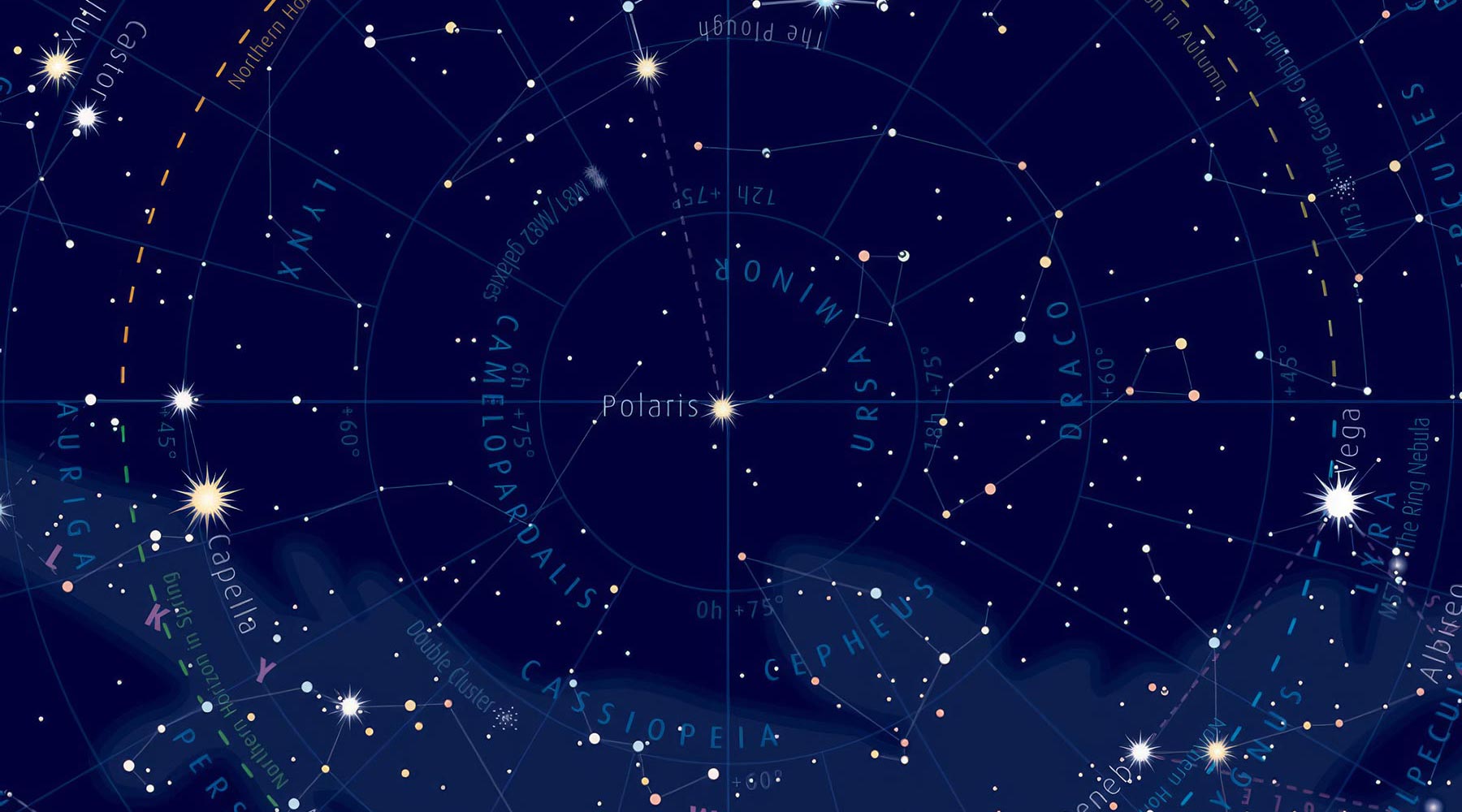
Did you know that you can become an astronomer from… your very own home?
Many astronomers started by observing the sky with their… “naked” eyes! And by “naked”, we simply mean looking with your eyes, without a telescope. All you need to begin your own exploration is a star map!
What is this map?
A planisphere, as it is called, is a circular map that helps us discover which stars and constellations are visible in the sky on a particular date and at a particular time.
How can we observe the sky?
Download the planisphere here. Follow the instructions in the Museum’s booklet “Observing the Sky” to make your own star map.
Before you begin, choose the date and time of your observation. By rotating the planisphere, you can see which stars will be visible at that moment.
Find a spot with as little artificial light as possible, look up and compare your map with the real sky. How many stars can you see? Look carefully at the patterns they form. Do any of them remind you of something?
Happy stargazing!
#Tips
- Find a dark spot! The more artificial lights there are around you, the harder it is to see the stars. Try to find a place away from bright lights and wait about 15–20 minutes for your eyes to adjust to the darkness. This will help you see more stars!
- If you want to write down something you have observed or find an object nearby, use a red-light torch. This will help your eyes maintain their adaptation to the darkness.
- Dress warmly and comfortably! Stargazing can take quite a while, so make sure you wear comfortable clothes and bring something warm, depending on the weather.